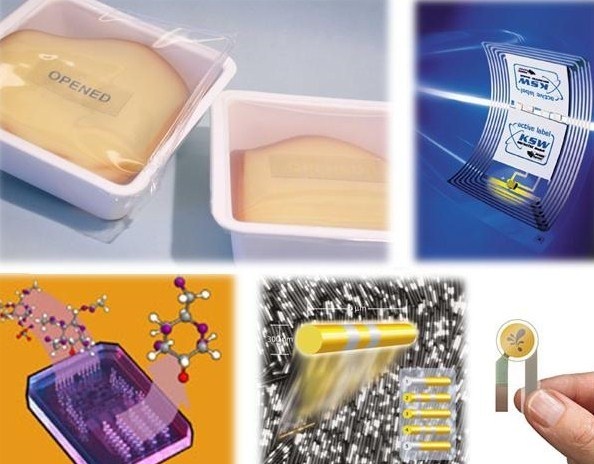
Affichage des articles dont le libellé est nano. Afficher tous les articles

jeudi 13 septembre 2012

Les nanotechnologies dans les emballages alimentaires : menace ou révolution?


Je vous invite à lire mon article publié dans le dernier numéro de la revue l’Actualité Alimentaire: Les nanotechnologies dans les emballages alimentaires: menace ou révolution?

La nanotechnologie a le potentiel de révolutionner le secteur de l’emballage. Mais si elles représentent une opportunité considérable sur les plans économique et social, elles soulèvent cependant un certain nombre de questionnements d’ordre sanitaire, environnemental, éthique, politique et réglementaire.

L'avenir des nanotechnologies dans l'emballage alimentaire semble conditionné par la collaboration étroite entre tous les acteurs de la chaîne pour que soient dissipés les inquiétudes et les risques ou que soient circonscrits ou éliminés certains problèmes provenant d’une utilisation non raisonnée des nanotechnologies. Les nanotechnologies peuvent jouer un rôle majeur dans l’industrie si sont prises en compte toutes les considérations de sécurité additionnelles tout en répondant aux besoins classiques auxquels répondent traditionnellement les emballages.

dimanche 29 avril 2012

FDA: Nano packaging needs safety scrutiny

The Food and Drug Administration issued two draft guidances for the use of nanotechnology in food and cosmetics industries. 

Specifically, the draft guidance suggests the FDA may require food companies to prove the safety of any packaging using nanotechnology, according to reports. Such consultation can help FDA experts address questions related to the safety or other attributes of nanotechnology products, or answer questions about their regulatory status, according to the FDA. 

Nanotechnology is an evolving technology that allows scientists to create, explore, and manipulate materials on a scale measured in nanometers--particles so small that they cannot be seen with a regular microscope. The technology has a broad range of potential applications, such as the packaging of food or altering the look and feel of cosmetics. 

Read more

Please find enclosed my talk entitled: “Printed Intelligence in Packaging: Current and Potential Applications of Nanotechnology” given last April 28-30, 2009 in Columbus, Ohio, USA for the 2009 TAPPI PLACE Flexible Packaging Summit.
Printed Intelligence in Packaging

mardi 1 mars 2011

Assess risk from nano-pollution and antimicrobials in packaging

The Institute of Food Science and Technology (IFST) has called for greater appraisal of the potential risks from the release into the environment of nanomaterials used in food packaging.

The possibility that wider exposure to anti-microbial agents in food contact materials (FCMs) may contribute to heightened bacterial resistance was highlighted as an area of concern for the UK-based body. It also said the accumulation of nanosilver in the environment should be scrutinised and the development of bespoke recycling procedures considered.

The IFST made its comments in its response to the European Food Safety Authority’s (EFSA) guidelines on the potential risks of nano-applications in food and feed published in January 2011.

The independent group said it was important that the EFSA document suggest the need for full toxicity data on engineered nanomaterials (ENM) used as composites in FCMs even where there is no evidence for migration of these particles into food, or where levels of migration are low, it said.

The body added: “IFST considers that this is important because, although the direct use of these materials may not lead to significant ingestion of the particles, knowledge of the level of toxicity, or lack of toxicity, may be needed in order to assess the acceptable levels of migration.”


samedi 5 février 2011

Les nanoparticules de dioxyde de titane (TiO2) suscitent des craintes pour la santé

Plus de deux millions de tonnes de dioxyde de titane nanométrique (nano-TiO2) sont produites chaque année dans le monde. Utilisé comme pigment et opacifiant, ce nanomatériau entre dans la composition de peintures, cosmétiques, crèmes solaires, médicaments, dentifrices, colorants alimentaires et nombre d'autres produits d'usage courant, selon l’article de l’ATS consacré à la publication des chercheurs romands.

Les chercheurs du Département de biochimie de l'Université de Lausanne (UNIL) ainsi que de l'Université d'Orléans, en France, et du Centre national français de la recherche scientifique (CNRS), dont le travail a été publié dans la revue américaine PNAS, se sont spécialement penchés sur les inflammations causées par le nano-TiO2. Ils l’ont testé sur des cellules humaines et sur des souris de laboratoire.

Selon leurs travaux, les nanoparticules de TiO2 produisent des effets similaires à ceux de deux autres irritants environnementaux bien connus, l'amiante et la silice. Comme eux, elles activent l'inflammasome NLRP3 – un complexe multi-protéique provoquant une réaction inflammatoire – et la production de dérivés réactifs de l'oxygène, des molécules toxiques capables de s'attaquer à l'ADN, aux protéines et aux membranes cellulaires.

mercredi 29 décembre 2010

Le Bilan de 2010 : CQVB, nanotechnologie dans les emballages et bioplastiques

Cette année, j’ai eu la chance de réaliser deux mandats pour le Centre québécois de valorisation des biotechnologies (CQVB) :

1) BioTendance: Les nanotechnologies peuvent-elles révolutionner l’emballage alimentaire ? Vous pouvez télécharger ici cette Biotendance.

Certes, les nanotechnologies soulèvent de grands espoirs et sont porteuses de progrès, mais elles suscitent également des interrogations et des craintes quant aux risques sanitaires et environnementaux. Ce numéro de BioTendance® offre un panorama des plus récentes applications des « nanos » dans le secteur de l’emballage alimentaire. Les enjeux et les menaces seront aussi évoqués.

2) BioVeille : Agropolymères et biopolymères de source bactérienne. Vous pouvez télécharger ici cette BioVeille.

Dans un contexte mondial marqué par une diminution des ressources fossiles et une hausse croissante du prix du pétrole, la mise en marché de matériaux biodégradables produits à partir de ressources renouvelables et non renouvelables représente un facteur majeur pour l'essor du développement durable. À cet effet, les bioplastiques suscitent un intérêt grandissant dans plusieurs secteurs industriels. Ce BioVeille® présente un aperçu de certaines recherches et innovations réalisées au Québec, au Canada et dans le monde touchant les agropolymères et les biopolymères de source bactérienne.

mercredi 3 novembre 2010

Les nanotechnologies peuvent-elles révolutionner l’emballage alimentaire ?

La nanotechnologie figure parmi les progrès technologiques les plus prometteurs. La nanotechnologie offre de nouvelles solutions en matière d’emballage alimentaire pouvant profiter à la fois aux consommateurs et à l’industrie. L’application de nouveaux matériaux à base de nanoparticules permet l’amélioration des propriétés mécaniques et thermiques ainsi que des propriétés barrières aux gaz (O2 et CO2) et à la vapeur d’eau.

La nanotechnologie favorise le développement des emballages dits intelligents intégrant des technologies prometteuses susceptibles d’assurer une meilleure traçabilité et de garantir la sécurité alimentaire au consommateur. Elle permet aussi la conception d’emballages actifs capables d’interagir avec la denrée alimentaire en vue de préserver ses propriétés organoleptiques et nutritionnelles et de prolonger sa durée de vie.

Certes, les nanotechnologies soulèvent de grands espoirs et sont porteuses de progrès, mais elles suscitent également des interrogations et des craintes quant aux risques sanitaires et environnementaux.

Ce numéro de BioTendance® offre un panorama des plus récentes applications des « nanos » dans le secteur de l’emballage alimentaire. Les enjeux et les menaces seront aussi évoqués.

Sommaire :
  1. Introduction
  2. Les nanotechnologies : c'est quoi au juste ?
    1. Définitions et applications
    2. Marchés et applications
  3. Nanotechnologie et emballage alimentaire
  4. Applications potentielles de la nanotechnologie dans l'emballage alimentaire
    1. Emballages aux propriétés particulières : nanocomposites
    2. Emballages biodégradables : nanobiocomposites
    3. Emballages actifs : nanomatériaux antimicrobiens
    4. Emballages intelligents : nanocapteurs
  5. Enjeux et défis industriels
  6. Cadres réglementaires et étiquetage
  7. Conclusion et perspectives
  8. Références
  9. Glossaire

vendredi 18 décembre 2009

Nanotechnologie: les nanoparticules pour des emballages intelligents

Le Club MCAS - Matériaux pour contact alimentaire et santé - qui a tenu en début de semaine son 18è séminaire a réuni de nombreux conférenciers parmi lesquels Alain Mimouni du CTCPA invité à présenter les perspectives de développements des nanotechnologies liées aux matériaux d’emballage.

Selon lui, c’est principalement via les emballages «intelligents» que les nanoparticules pénétreront sur le marché, que ce soit au niveau de l'éco-conception (poids, résistance physique), de la sécurité et de la conservation des aliments (perméabilité variable aux gaz, bactéricides...) ou bien de la nano-détection (microorganismes pathogènes, niveau de fraîcheur. Les nanoparticules peuvent contribuer notamment à “améliorer des propriétés des polymères pour augmenter la durée de vie des produits, et servir à fabriquer des capteurs intelligents imprimés et des indicateurs pour les emballages flexibles» a-t-il précisé. Ainsi, l’intérêt des nanocapteurs semble «s’imposer comme une des applications intéressant la sécurité alimentaire». Les nanocapteurs intégrés à l’emballage alimentaire peuvent ainsi détecter les composés chimiques, les pathogènes et les toxines dans l’aliment, par exemple. Les capteurs nanométriques peuvent être imprimés sur l’emballage.
---
Mais A. Mimouni a aussi souligné les points négatifs qui existent aujourd’hui concernant l’évaluation sur la santé de l’homme, et les nombreuses interrogations qui demeurent. «En deçà d’une certaine taille, les propriétés physiques et chimiques se modifient, et leur toxicité dépend de leurs niveaux de concentration. Aujourd’hui, on ne connaît pas bien les mécanismes de destruction» a–t-il déclaré. On s’interroge sur les interactions entre matériaux et aliments qui peuvent entraîner un phénomène de migration, et dans ce contexte, les nanoparticules incorporées au matériau peuvent migrer dans l’aliment. ll faut encore beaucoup d’études et une métrologie adaptée pour pouvoir parfaitement évaluer la toxicité effective des nanoparticules, a indiqué A. Mimouni. Les nanoparticules intéressent l’emballage et au delà.
---
Précisément pour éclairer davantage les parties prenantes à ces développements, un débat public est organisé suite aux travaux du Grenelle. Des organisations professionnelles de l’emballage y participent.

Pour les applications courantes et potentielles de la nanotechnologie dans l’emballage je vous invite à consulter la présentation intitulée : "Printed Intelligence in Packaging: Current and Potential Applications of Nanotechnology" que j’ai donnée dans le cadre du 2009 TAPPI Flexible Packaging Summit, à Columbus (Ohio, USA).
---

samedi 28 novembre 2009

Nanotechnology has 'big potential' for intelligent packaging

PIRA consultant Dr Graham Moore has highlighted the "big potential" for nanotechnology in packaging as long as issues surrounding consumer safety are fully addressed.

Moore made the comments during an online conference organised yesterday (26 November) by the NanoKTN in conjunction with Leatherhead Food Research, titled Development and Enhancement of Packaging through Nanotechnology.

Barriers, track and trace, anti-counterfeit measures and intelligent packaging were all identified as possible outlets for nanotechnologies.

However, Moore said that before nanotechnologies become readily accepted by the packaging market, issues such as supply and consumer safety must be addressed.

He said that if brands "go down the route" of nanotechnology they must have the "quantity and quality they need".

"Packaging is already under huge scrutiny because of migration of chemicals," added Moore. "They must show there is no migration and no detriment to the consumer."

Please find enclosed my talk entitled: “Printed Intelligence in Packaging: Current and Potential Applications of Nanotechnology” given last April 28-30, 2009 in Columbus, Ohio, USA for the 2009 TAPPI PLACE Flexible Packaging Summit.
Printed Intelligence in Packaging


jeudi 26 novembre 2009

Les nanoparticules de TiO2 sont-elles dangereuses pour l'homme ?

Qu'on le sache ou non, on retrouve les nanoparticules de dioxyde de titane (TiO2) dans la plupart des produits cosmétiques, dans les crèmes solaires, dans les colorants alimentaires, dans les compléments nutritionnels et dans les emballages dits intelligents (Ex. encre intelligente à base de nano-particules photosensibles à base de TiO2).

Bien que le TiO2 à l'état macroscopique et microscopique soit chimiquement inerte, il a déjà été montré qu'à l'échelle nanoscopique le TiO2 a un impact sur la santé : il existe une cancérogénèse pulmonaire chez le rat, (non transposable à l'homme selon de nombreux auteurs). Cependant, les mécanismes de génotoxicité (c'est-à-dire qui peut compromettre l'intégrité du génome) n'ont pas été définis clairement et jusqu'à maintenant ont été très peu étudiés dans des conditions in vivo. Une étude conduite par des chercheurs de Univesity of California à Los Angeles (UCLA), au Jonsonn Comprehensive Cancer Center, est la première à montrer un tel effet génotoxique des nanoparticules de TiO2 sur des souris vivantes, d'après Robert Schiestl, professeur de pathologie, radiation et oncologie à UCLA, et auteur principal de l'étude.

L'étude porte sur des souris à qui les chercheurs ont donné à boire de l'eau contenant des nanoparticules de TiO2. Une fois que les nanoparticules de TiO2 sont entrées dans le système, elles s'accumulent dans différents organes et le corps n'a aucun moyen de les éliminer en totalité. Et parce qu'elles sont très petites (de 20nm à 200nm), elles peuvent pénétrer les cellules, et peuvent interférer avec les mécanismes intracellulaires causant le stress oxydant et les inflammations pulmonaires qui avaient déjà été mis en évidence chez le rat. Plus les particules sont petites, plus la surface générée par l'agglomération des particules est importante (de manière exponentielle), plus le stress oxydant et les inflammations sont importants, c'est ce que l'on appelle la réactivité de surface.

Outre le stress oxydant et les inflammations, un nouveau mécanisme de toxicité plus particulièrement inquiétant a été mis en évidence par les chercheurs chez les souris vivantes. En effet ils montrent des modifications des chaines d'ADN : des cassures dans l'ADN double hélice ont été mises en évidence.

La manufacture de TiO2 représente une industrie importante, avec une production d'environ deux millions de tonnes par an. Les personnes les plus exposées aux nanoparticules sont évidemment les employés de cette industrie, mais les résultats de cette étude devraient susciter les inquiétudes quant à l'exposition aux nanoparticules des consommateurs, d'après le professeur Schiestl. Les souris exposées aux nanoparticules de TiO2 ont commencé à montrer des dommages génétiques à partir du 5e jour. L'équivalent humain serait d'une année et demie d'exposition aux nanoparticules dans un environnement industriel. Cependant il n'est pas clair si l'exposition régulière et quotidienne augmente exponentiellement avec le temps.

Source
--

samedi 26 septembre 2009

Printed Intelligence: Sensor, RFID, e-paper and Photovoltaic

Cheap, sensitive sensors could detect explosives, toxins in water

A sensitive new Stanford-developed disposable chip detects low concentrations of the explosive trinitrotoluene (TNT) and a close chemical cousin of the dreaded toxic nerve agent sarin in water samples. The research appears online this week in the journal ACS Nano.

A nanotube is a rolled-up sheet of carbon atoms that is only one atom thick. Every atom is therefore on the tube's surface. This makes single-walled nanotubes very sensitive to nearby molecules that would drift by in a water sample.

The chip itself is made of an inexpensive, flexible plastic substrate, rather than the more expensive, rigid silicon that underlies most computer chips. The researchers also use a thin polymer gate electrical insulator layer, which allows the device to operate on less than 1 volt of electricity.

Polymer memory products manufactured in roll-to-roll printing process

PolyIC and Thin Film Electronics ASA have jointly manufactured fully functional re-writable polymer memory products in a high-volume roll-to-roll printing process.

The high yield printing process gives leading production performance, and the resulting memory product meets low voltage requirements for consumer products, such as in the toys and games industry.

"PolyIC has developed and built up a roll-to-roll production process for printed electronics, and has successfully demonstrated its first printed RFID tags. Thinfilm's memory technology is complementary to our own technology, and by using our process and production technology, we have been able to successfully manufacture stand-alone Thinfilm memory products that satisfy our current customer requirements," commented Wolfgang Mildner, Managing Director at PolyIC.
---
E-paper display market reaches $1.17 billion in 2014

IDTechEx find that the total market size for e-paper displays in 2010 is $131 million rising to $1.17 billion in 2014. This is the value of the display component, not the product. To date, e-paper display technologies have been used in more than $1 billion worth of products. Much of the growth is driven by e-readers following the huge success of Amazon's Kindle. However, much more is to come. IDTechEx find that in 2020 the market value will reach $7.45 billion thanks to the availability of flexible, color displays and faster refresh rates.

Tata group invests in a start-up producing photovoltaic solar modules

Tata group has invested in Flisom (Flexible and lightweight solar modules), a Switzerland-based company, to mark its interest in the solar photovoltaic industry and focus on developing the next generation of clean energy as a future growth area.

The plant will use superior technology and develop high quality flexible solar cells which in turn will produce electricity at ultra-low cost. These high performance and low-cost solar cells will create a significant impact on clean and sustainable solar electricity generation.

The global market for PV has grown at about 30% annually for over 10 years. The cumulative solar energy production still accounts for less than 0.1% of the global energy demand. PV growth is set to accelerate in the coming years as it becomes cost-competitive with the retail price of electricity in many parts of the world.
---

lundi 10 août 2009

New light-emitting biomaterial could improve tumor imaging

A new material developed at the University of Virginia – an oxygen nanosensor that couples a light-emitting dye with a biopolymer – simplifies the imaging of oxygen-deficient regions of tumors. Such tumors are associated with increased cancer aggressiveness and are particularly difficult to treat.

Oxygen nanosensors are powerful new research tools that one day may also be used for the diagnosis and detection of diseases and for planning treatment strategies.

The new material is based on poly(lactic acid), a biorenewable, biodegradable polymer that is safe for the body and the environment, and is easy and inexpensive to fabricate in many forms, including films, fibers and nanoparticles. It is useful for medical research as well as environmental research, sustainable design and green products, too.

The versatile sensor material is the result of research combining green chemistry with nanotechnology, and is reported in the current online edition of the journal Nature Materials.

Source: A dual-emissive-materials design concept enables tumour hypoxia imaging
Guoqing Zhang, Gregory M. Palmer, Mark W. Dewhirst, Cassandra L. Fraser. Nature Materials (9 August 2009) doi:10.1038/nmat2509 Letter
---

mardi 16 juin 2009

Pack news of the week: biodegradable marketing, package redesign and nanoscience benefits


From cups and plates to dog-waste bags, plenty of products these days claim to be biodegradable. But the Federal Trade Commission appears poised to make such claims all but impossible for most marketers.

On Tuesday, the F.T.C. charged Kmart and two other companies — Tender Corp., and Dyna-E International — with making “false and unsubstantiated claims” that their products were biodegradable.

This is not the first controversy to arise recently over the use of the term “biodegradable.” A maker of plastic bags for newspapers recently scaled back its eco-friendly claims after being challenged over the bags’ biodegradability. The situation was handled through the National Advertising Division of the Council of Better Business Bureaus, a self-regulatory body.

Managing Risk in a Package Redesign: What Can We Learn from Tropicana?

Earlier this year, we witnessed one of the most publicized packaging missteps in recent memory. Indeed, Tropicana’s misguided redesign has already become infamous as, perhaps, the most notable marketing debacle since the introduction of New Coke nearly 25 years ago.

A recap. On January 8th Tropicana North America introduced a revolutionary new look for its flagship Tropicana Pure Premium brand, the market leader with over $700 million in North American sales. This design change was driven by and linked to a new $35 million advertising campaign that prominently featured the new packaging.

Food safety rules and costs threaten nano science benefits

Over restrictive federal regulation of nano science should not be allowed to strangle the benefits the technology could bring to food safety, quality and availability, warns William Norwood, president nanoAgri Systems.

Speaking at the IFT International Nanoscience conference at Anaheim, California, Norwood told FoodProductionDaily.com that: “The benefits of nano technology across a wide range of industries could be more important than nuclear energy. But restrictive rules could kill it…Nano is now a fear word.”

Environmental groups are lobbying the Environmental Protection Agency in a bid to persuade it to close the US nano industry, he said.

Also the Federal Insecticide, Fungicide and Rodenticide Act is placing big barriers to the development of nanotechnology.
---

lundi 8 juin 2009

Antimicrobial packaging: Antioxidants and Nanoscience


Polyphenol-rich extracts from olive oil pomace may reduce the formation of off-flavours in meats by as much as 80 per cent, suggests new research.

The olive extract, obtained from the waste waters of olive oil pomace, performed better than a commercial antioxidant sourced from wine, according to findings published in the journal Food Chemistry.

“The polyphenol extract from the waste water of olive oil’s pomace significantly inhibited lipid oxidation in pre-cooked ground beef and pork. The antioxidant effect increased with the dose and was higher in beef than in pork,” wrote Sharon DeJong from Food Science Australia and Maria Cecilia Lanari from Argentina’s National Council for Scientific and Technical Investigation (CONICET).

Nanotechnology promises big benefits for food safety, quality, and shelf life provided the challenges it brings can be overcome, delegates were told at the Institute of Food Technology's annual conference at Anaheim, California.

"There's great potential for nanoscience in food industry applications," said Bernadene Magnuson, senior scientific and regulatory consultant in food toxicology with Cantox Health Sciences International, Ontario, Canada. The technology, which harnesses the use of particles between one and 100 nanometers in length, could be used to provide anti-microbial coatings for food contact surfaces or packaging.

Other applications include using nanoscience to engineer sensors to detect pathogens and toxins in food or to register environmental changes. For example, nanochips in smart inks used for food packaging could register warnings if the temperature of the package rose above certain programmed limits.
---

lundi 4 mai 2009

Nanotechnologies: Les eurodéputés appellent à plus de prudence

Les eurodéputés déplorent l’absence d’évaluation spécifique aux nanoparticules dans l’Union européenne. Selon eux, elles présentent des risques potentiels nouveaux tout à fait significatifs, du fait de leur taille, comme par exemple une réactivité et une mobilité accrues, conduisant éventuellement à une plus grande toxicité, le tout associé avec une pénétration plus facile dans le corps humain, impliquant des mécanismes nouveaux d’interférences avec la physiologie humaine et des autres espèces vivantes.
---
Le Parlement demande donc à ce que les consommateurs soient informés sur l’utilisation des nanoparticules dans les produits de consommation : toutes les substances, mélanges ou articles présents sous forme de nanoparticules devraient ainsi être clairement identifiés sur l’étiquetage (par exemple en indiquant la mention nano entre parenthèses dans la liste des ingrédients à côté des substances concernées, comme ce sera bientôt obligatoire pour les cosmétiques).

Lire la suite…
---

La sécurité alimentaire et la lutte contre la contrefaçon : les nano-emballages intelligents « imprimés » à la rescousse ?

Islem A. Yezza, Chargé de Projets emballages intelligents et écologiques à l’Institut des Communications Graphiques du Québec a donné une présentation intitulée : “Printed Intelligence in Packaging: Current and Potential Applications of Nanotechnology” dans le cadre du 2009 TAPPI Flexible Packaging Summit, à Columbus (Ohio, USA).

---

vendredi 1 mai 2009

Printed Intelligence in Packaging: Current and Potential Applications of Nanotechnology

Back from Columbus. Very interesting Symposium on Nanomaterials for Flexible Packaging. Here is my speech :
Printed Intelligence in Packaging
Printed Intelligence in Packaging pakbec Nano-printed intelligent packaging is the results of “Thinking Outside the Box”. Nano printed intelligence has potential to influence the packaging sector greatly, as it fits perfectly with the food safety strategy and brand protection

Take home…Think outside the box
Demands on packaging are continually changing: increases in functionality, improvements in economics and meeting environmental and legislative measures.
  • Nano-printed intelligent packaging is the results of “Thinking Outside the Box”.
  • Nano printed intelligence has potential to influence the packaging sector greatly, as it fits perfectly with the food safety strategy and brand protection

Take home…Nano-Printed Intelligence
  • Printing technologies enable cost-effective, mass production of smart labels integrated in flexible packaging
  • Much of the technology is still confined to the lab
  • Consumer acceptance of the use of printed nano-materials in packaging is very important and will be greatly dependent on the demonstrated benefits and safety of the new packaging products
Think Big…Think Nano!!!
---

lundi 6 avril 2009

2009 PLACE Flexible Packaging Summit

The Flexible Packaging Industry will converge April 28-30, 2009 in Columbus, Ohio, USA for the 2009 TAPPI PLACE (Polymers, Laminations, Adhesives, Coatings and Extrusions) Flexible Packaging Summit. The event will include the two-day Consumer Packaging Solutions for Barrier Performance Course and the Symposium on Nanomaterials for Flexible Packaging.

View Summit Brochure.

I will attend the symposium to give a speech entitled: “Printed Intelligence in Packaging: Current and Potential Applications of Nanotechnology”

Food safety and counterfeiting: Could Nano-Printed Intelligent Packaging be a Solution?

jeudi 19 mars 2009

Nano sensors for rapid detection of Salmonella in food

Nanoscale sensors have been emerging as a feature of recent nanotechnology applications for food safety and quality measurement. Scientists are using nanotechnology for a rapid detection of Salmonella in foods. Here are two recent scientific findings:

  • Dutch Bionanotechnology Centre for Food and Health Innovations used nanoparticles to build devices that sense the DNA of microbes such as Salmonella or Listeria (CBC, March 2009). Read more…
  • US Department of Agriculture’s Research Service (ARS) and University of Georgia developed a nanorod-based biosensor that enables rapid detection of the Salmonella pathogen with high sensitivity. The sensor include fluorescent organic dye particles attached to Salmonella antibodies; the antibodies latch onto Salmonella bacteria and the dye lights up like a beacon, making the bacteria easier to see. (Food Production Daily, January 2009). Read more…

---

samedi 24 janvier 2009

Plus beaux, plus frais, plus sains- grâce aux nano-emballages et au nano-additifs

La nanotechnologie fait son entrée dans l’alimentation : sous forme d’additifs ou de matériaux d’emballage. L’étude du centre d’évaluation des choix technologiques (TA-SWISS) apporte une vue d’ensemble des nanomatériaux déjà utilisés. Se basant sur des critères environnementaux et de gestion durable, elle évalue les produits contenants des nanomatériaux et montre les développements possibles et la prudence qui s’impose.

«En Suisse, nous retrouvons très peu d'aliments contenant des additifs de taille nanométrique», souligne Martin Möller, de l'Institut d'écologie appliquée de Fribourg-en-Brisgau, qui a codirigé l'étude. Tout au plus cite-t-il un condiment, l'acide silicique (E551): «C'est un antiagglomérant, constitué de particules nanométriques, ajouté depuis des décennies aux épices pour éviter qu'elles ne s'agglutinent. Mais qui est sans danger, selon diverses batteries de tests.»

En revanche, «les emballages alimentaires ayant des composants «nano» jouent déjà un rôle important en Suisse», poursuit-il. Exemple type: le PET. Ce matériau laisse, à terme, s'échapper le gaz carbonique des boissons - c'est pour cette raison que la bière n'est conservée que dans des flacons en verre ou en aluminium. Pour annihiler ce processus de diffusion, certaines bouteilles de PET sont donc recouvertes de couches nanométriques de carbone ou d'oxyde de silicium, sortes de barrière antioxygène.

Dans un domaine voisin, le groupe néo-zélandais Jenkins commercialise un nanofilm réagissant à des substances aromatiques libérées par des fruits pendant le mûrissement, rapporte le TA-SWISS. La pellicule change de couleur suivant le degré de maturation. Enfin, des sociétés développent des emballages recouverts d'une nanocouche d'argent. L'action bactéricide de ce métal est incontestée, et permettrait d'empêcher toute moisissure.

Le potentiel économique dans ces deux champs d'activité - aliments et emballage - est énorme, selon les analystes. Pour le second, le groupe de consultants Helmut Kaiser estime le marché actuel à 980 millions de dollars; il grimperait à 100 milliards d'ici à dix ans.

Lire la suite…
---

mercredi 14 janvier 2009

Bio-based nanotechnology materials for a green society

Synthetic fibers are ubiquitous in modern society and their manufacture represents a huge, multi-billion dollar worldwide industry. Synthetic fibers – carbon fibers, nylon, polyester, kevlar, spandex, etc. – are manufactured from fossil fuels, usually from oil, but sometimes from coal or natural gas. Most of these materials are not biodegradable and, in addition to their significant carbon footprint during production, they pose environmental problems at the end of their life cycle.

Natural fibers, on the other hand, such as wool and cotton, come from renewable animal or plant sources but they usually lack the high-performance characteristics of many synthetic fibers. This may change, as the new field of bio-based nanomaterials promises to deliver environmentally friendly, high-performance bio-fiber materials that can replace some of the synthetic materials.

Cellulose, which is the most common organic compound on the planet, is a structural component of the cell walls of many plants. Its industrial use is mainly for making paper and cardboard but recently it has also attracted significant interest as a source of biofuel production. Nanotechnology researchers are interested in it because highly-crystalline cellulose nanofibers, abundantly present in natural plant bodies, have unique properties and sizes different from synthetic nanofibers. These scientists believe that cellulose nanofibers have a high potential to be used as transparent and extremely strong films in many different areas. This could lead to environmentally-compatible and high-performance packaging components.

"Because of the presence of numerous hydrogen bonds between cellulose microfibrils in plant cell walls, it has been impossible to convert native cellulose fibers into aqueous dispersions of individual cellulose microfibrils without significant decreases in microfibril length and without impairing their structural potential," Dr. Akira Isogai explains to Nanowerk. "With our newly developed technique, we were able to obtain completely individualized cellulose nanofibers from wood cellulose, 4-5 nm in width and at least a few microns in length."

Isogai, a professor in the Laboratory of Cellulose, Pulp and Paper Science at the Department of Biomaterial Sciences, University of Tokyo, together with his team, have used their cellulose-based nanofibers to fabricate transparent gels and thin films that have remarkably high-oxygen barrier capability (which, according to Isogai, is a really unexpected result), high optical transparency, high strength and a quite low coefficient of thermal expansivity, caused by high crystallinity of native cellulose.

The scientists reported their findings in the December 4, 2008 online edition of Biomacromolecules ("Transparent and High Gas Barrier Films of Cellulose Nanofibers Prepared by TEMPO-Mediated Oxidation").

The technique developed by the Japanese team is based on the selective oxidation of primary hydroxyl groups on the fibril surfaces to anionically-charged carboxylate groups through TEMPO-mediated oxidation of native celluloses and the subsequent mild disintegration in water. The resulting bionanofibers maintained the crystallinity and crystal widths of the original wood celluloses to be about 75% and 3-4 nm, respectively.

Systematic diagram of individualization of nano-sized plant cellulose fibrils by direct surface carboxylation using TEMPO catalyst. (Image: Dr. Isogai/University of Tokyo).

Because the TEMPO-oxidized cellulose nanofiber films had quite high oxygen-barrier properties, they are potentially very interesting materials for biodegradable and high-performance packaging components in the pharmaceutical and food industries.

Other candidates to use the new bio-nanofibers are flexible display panel and electric device components (because of the extremely low coefficient of thermal expansion and the high optical transparency), high tensile strengths fiber and film composite materials, and health care components.

A problem that Isogai's team encountered was a gradual degradation of the films' oxygen barrier capability with increasing humidity. Although oxygen permeability of the TEMPO-oxidized cellulose nanofiber films under dry conditions was remarkably low, it became higher when measured at relative humidity of, for example, 90%. Moreover, water vapor permeability of the original films, which is also one of the significant and required properties for packaging components, was insufficient at present because of the hydrophobic nature of the TEMPO-oxidized cellulose nanofibers.

"We are now working on refining our processing, modification and composition methods of the TEMPO-oxidized cellulose nanofibers to add moisture-resistance, high oxygen-barrier properties at high relative humidity, water vapor-barrier properties, and other functional properties necessary for high-tech materials," says Isogai.

A project of the TEMPO-oxidized cellulose nanofibers, supported by the Japanese Government and in cooperation with Nippon Paper Industries and Kao Corporation, has been ongoing since 2007. Its goal is the development of environmentally-compatible and high-performance packaging components.

Isogai mentions that this project, proposed by his group, was selected as the highest ranked of the Nanotech Challenge Program by the New Energy and Industrial Technology Development Organization of Japan.

Source

---