Affichage des articles dont le libellé est Coating. Afficher tous les articles

dimanche 9 juin 2013

CoRR Paper Foodservice Packaging Conference: Wrap-up and videos

Thanks to Scott Seydel for recording and sharing our last Food Packaging CoRR Conference, held in Washington few weeks ago. 

Discussion Panel

Lily Kelly, Director of Global Green's Coalition for Resource Recycling organized a panel of experts on recyclable wholesale fresh food packaging at the CoRR's member meeting in the nation's Capitol on April 4, 2013. The panel included box manufacturers Islem Yezza of Cascades and Jeremy Bower of Interstate Resources, along with recyclable moisture barrier coating company representatives Dave Grillo from the Chemol Company and Stefan Richwine from Spectra-Kote. Clips of comments from the assembled members are included by Clark Seydel of the Seydel Companies, and Chuck Klass of Klass Associates. Earlier speakers included Sara Hartwell of the U.S. Environmental Protection Agency, Edmund Miller of the U.S. Department of Defense, Chris Weiss of the DC Environmental Network, Mary Lynn Wilhere of the DC Department of the Environment and Taste of Washington, and Hiroki Nanko of Taizen. 

Click Here to watch the Discussion Panel Video (Duration 7:45 min)  

You find below my talk entitled: "Recyclable coated paper for Food service Packaging":


Chuck Klass of Klass Associates Inc, shared with us latest trends in OCC supply and demand: 1) Prices will continue to escalate; 2) Recyclable barrier coatings replacing waxing can increase supply but are not a long term answer to the shortage 3) Recycling mills may need to utilize alternative sources of recycled fiber 4) Installing a parallel system to process the “side stream” can make economic sense. 

Click Here to watch Chuck Klass Presentation (Duration 27:30 min) 

Hiroki Nanko of Georgia describes machinery, equipment, and processing used in an exciting new processing line that separates plastic laminated films from carton and cup stock fibers such that they can be recycled in conventional recycled paper and linerboard mills. 

Click Here to watch Hiroki Nanko Presentation (Duration 8:20 min) 

vendredi 5 avril 2013

jeudi 4 avril 2013

Recyclable coated paper for Food service Packaging


I will be presenting at the upcoming FoodPackaging CoRR Conference, scheduled for April 4, 2013 in Washington, DC.

My talk entitled: "Recyclable coated paper for Food service Packaging" will be focused on the application of recyclable barriers on paper for Food service Packaging Applications.


Agenda


1.     Paper-based Packaging : Trends and Market
2.     Enhancing barrier properties: Why Wax is on the Wane?
3.     Extrusion coating/lamination:
1.     Conventional resin
2.     Compostable resin (PLA)
3.     Film lamination
4.     Water-based coating: A bright future
5.     Eco-friendly and Innovative Paper-based Packaging
6.     Take home…

dimanche 17 mars 2013

Greening Fast Food Packaging


Dogwood Alliance’s report “Greening Fast Food Packaging: A Roadmap to Best Practices,” outlines eight key attributes of environmentally friendly fast food packaging, and provides guidance on how to assess environmental impacts in the supply chain. The report highlights leaders in the fast food industry. It also includes a survey to help assess a company’s current packaging.
  1. Embrace Corporate Leadership on Sustainability
  2. Use Full Life Cycle and Supply Chain Approach
  3. Reduce Overall Packaging and Increase Efficiency
  4. Increase the Use of Recycled Fiber
  5. Eliminate Paper Originating from Controversial Forestry Practices
  6. Increase In-Store Recycling and Recovery
  7. Eliminate Toxic Inks, Coatings and Labels
  8. Reduce Carbon Footprint

The full report is available at DogwoodAlliance

mardi 5 mars 2013

Cascades – Industrial Packaging, to exhibit at the 2013 International Boston Seafood Show

The International BostonSeafood Show is North America’s largest seafood trade show, which is taking place on March 10-12, 2013 at the Boston Convention and Exhibition Center.

Visit Cascades-IndustrialPackaging Booth #1180 to meet our friendly staff and learn more about our eco-friendly and innovative packaging solutions for the transport of fresh and frozen fish and seafood products.


mercredi 23 janvier 2013

Results of Recyclable Produce Box Pilots

For the pilots, Global Green USA teamed up with members of their Coalition for Resource Recovery (CoRR) to test alternatives to paraffin-coated produce boxes, which cannot be recycled and are a contaminant within bales of uncoated cardboard. Boxes were tested with a variety of wet cooling processes in California and New Jersey and the results show that many box products with recyclable coatings are robust enough to withstand vacuum cooling, hydro-vac, and hydro-cooling processes.


 "The move to recyclable-coated boxes will divert waste from landfills and save money for the foodservice and retail industry," says Lily Kelly, interim director of CoRR and coordinator of the pilots. "It is an exciting time." 

Greens, vegetables, seafood, and meats are often transported in paraffin-coated cardboard, generating 1.45 million tons of solid waste that must be sent to landfills or burned. If these cases were designed for recycling and were recycled, CoRR believes retailers and restaurants could realize a net benefit of combined cost savings and revenue generation of $200 million nationwide. CoRR has worked since 2008 to accelerate the industry adoption of alternative recyclable-coated packaging and recycling it, which could reduce America's annual carbon emissions by 4.5 million mtCO2e—the equivalent of eliminating an entire coal-fired power plant with no loss of energy. (The Fibre Box Association estimates that 5% of OCC is wax-coated. EPA’s 2010 Solid Waste Facts and Figures, WARM Tool, and Greenhouse Gas Equivalencies Calculator were used to calculate potential greenhouse gas savings. Savings assumes 100% of the boxes and packaging generated is recycled. National restaurateur and grocers’ savings are based on a national average tipping fee of $44.09, based on the 2010 data in BioCycle’s State of Garbage report. A spot market price of $100/ton of OCC was assumed.) 

Food producers report finding recyclable boxes easier to use than paraffin-coated boxes, and have benefited from being able to recycle them on the farm. “This is good news for farmers and our customers," says Vince Consalo of Consalo and Sons, a produce distributor in Vineland, NJ, who helped to test the recyclable boxes in September. “Recyclability is a big selling point." Other participants in the pilot program also expressed satisfaction with the results, including Lakeside Organic Gardens in Watsonville, CA. 

The results are advantageous for grocers, who may soon be receiving more recyclable-coated boxes that they can bundle with their regular cardboard instead of paying to send them out with the trash. "Selling cardboard is a revenue stream for us, and it helps contribute to our Zero Waste Goals of 2020," says Dom D'Agostino of Ahold Intl., which operates several grocery store chains, including Stop and Shop and Giant. "If we could recycle coated cardboard, it would significantly help us meet these goals." 

Global Green USA's pilot series is slated to continue in 2013. "As a third party, our job is to document these tests and spread the word about what is recyclable and what works,” says Kelly. "Our next steps are to document increasingly tough use of the boxes—wetter cooling and longer distance traveled. We’re confident that these boxes can handle it, and we’re excited to document next year's story in video as well." 

vendredi 18 janvier 2013

The new, reusable (and recyclable) Starbucks® cup: Clarifications, Thoughts and Questions


I would like to share with you some Clarifications/Thoughts/Interrogations regarding the new, reusable (and recyclable) Starbucks® cup for hot beverages (source).

1-     "When I talked with Jim Hanna, director of environmental impact for Starbucks, regarding the cups made out of 100% virgin polypropylene, he told me that one main reason the company turned to plastic was to cut down on paper waste. Starbucks uses about 4 billion disposable cups annually and the interior wax coating makes them difficult to recycle." MISLEADING: Starbucks disposable cups are made from paper coated with PE (polyethylene). Polycoated cups are recyclable and repulpable. Furthermore, most paper mills are able to process paper mixed with other materials such as polycoated paper. Pulper equipped with scavenger could remove plastic debris. Finally, polyethylene coating represents less than 6.6% of total basis weight.

2-     "The exciting thing about PP is that it's one of the most versatile resins out there," Hanna said. "From cradle-to-cradle, PP offers one of the best environmental stories; it's just a winner all around." MISLEADING: Starbucks reusable cups are made from polypropylene #5 Plastics. In fact, most polypropylene #5 plastics, unless they're reused, end up in the landfill since so few municipalities accept them.

3-     What is the carbon footprint of reusable cup VS disposable cup?

4-     PP based reusable cups cost $1. However, a major price hike has hit the North American polypropylene market, sending prices up an average of 15 cents per pound since Jan. 1. Can we expect a cup price increase in the upcoming months?

5-     How about increasing Starbucks cups recycled fiber content? Cascades, developed recently a new grade of cupstock paper with 25% recycled fiber content.

6-     How about water-based coating for a fully repulpable and recyclable cups? (The idea is to replace Polyethylene by water-based coating)

7-     How long do the cups last? Reusable cups need a lot of carefulness/attention/love: not lose them, not crush them, and not forget to bring them…

mercredi 16 janvier 2013

ThermaFresh Box: RETHINKING fresh fish packing containers


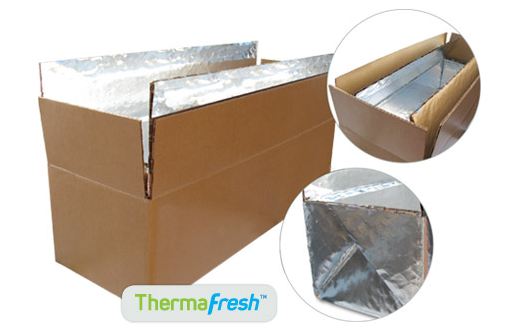
Cascades offers ThermaFresh, a new packaging innovation that is an ingenious eco-designed option to replace traditional fresh fish packing containers. By rethinking protective packaging, Cascades provides the industry with a high-performance, cost-effective solution for the packaging and distribution of fresh food.

The ThermaFresh container is designed for shipment of fresh food both inside and outside the cold chain, and its thermal performance is equivalent to that of the traditional containers. The containers can keep the food at the required chill level (39°F/4°C) outside the cold chain for a period exceeding 48 hours.

The components of the ThermaFresh container are a water-resistant corrugated box, a metalized film liner, and a honeycomb structural core. The thermal barrier uses the principle of radiant barrier technology. The Technicomb (honeycomb paperboard) construction traps the air inside, and the metalized film liner reflects the heat molecules; when both are combined, they provide significant thermal performance. Since the ThermaFresh container is Direct Food Contact compliant, no plastic bag is required for the shipment of whole fishes.

The smart, patented waterproof liner is crack-proof and the ThermaFresh container can resist rough handling. This considerably reduces spoilage and eliminates potential contamination which can occur through the distribution process.

With this new alternative container, there is no additional disposal cost to the end user. The ThermaFresh container is easily recyclable and it can be bailed within the OCC (Old Corrugated Container) programs. Thanks to ThermaFresh, rethinking fresh food distribution packaging provides the industry with the cost effective, added performance it needed.

Download Brochure
“We start with the perfect water, which produces beautifully textured fish, but the other important thing is the way we pack it up. We have a system [of recyclable corrugated cardboard cartons and liners] that makes sure that the chef gets to experience the fish exactly as it was pulled from the water, and then customers get a great dining experience”. Dave Mergle, Skuna Bay's marketing director.


Cascades has produced a video-animation exhibiting all of its eco-designed packaging innovations with respect to industrial uses, which is available on line at: Cascades Industrial Packaging

mardi 1 janvier 2013

Five Packaging Trends That Will Shape 2013


Here is my list of 5 packaging trends to watch closely in 2013:

1)   Bio-Based Plastics: Recyclable PET made from renewable resource is projected to offer significant growth potential over the longer term, particularly as large corporations, especially those in the soft drink industry, are investing heavily in the development of this material.

2)     Smart Packaging: The focus of active and intelligent packaging has moved from specific retailer and manufacturer driven benefits like shelf-life extension, traceability and food waste reduction, to include more consumer focused benefits such as food quality and safety, freshness and information.

3)     Stand-up Pouches: Packaged food makers are thinking outside the bottle and can. Flexible packaging, especially stand-up pouches provide Maximum Flexibility, Sustainability and Convenience.They are an innovative marketing approach to stimulate the sales of a stagnant brand or increase the acceptance and success of a new product introduction.

4)     Retail Ready Packaging (RRP): continues to gain traction in North America as a greater number of retailers start to consider implementation, and others broaden the scope of existing initiatives into additional categories

5)     Packaging and social media: Getting found by customers. The new age of inbound marketing is about providing value and earning customer loyalty instead of simply pounding a message into consumers heads and hoping it will stick.

Best wishes for a healthy, wealthy, sustainable and innovative New Year 2013!


  1. Biobased Plastic future
According to a recent Smithers RAPRA study (2012), worldwide consumption of all polymers reached about 259 million tonnes in 2012, with bioplastics representing 0.4% at 890,000 tonnes. So why haven’t bioplastics captured a larger market share?  There are four reasons: 

1.   Performance is not matched to brand owner or consumer expectations;
2.   Time-line to market acceptance not realistic;
3.   Bioplastic companies marketing efforts not given enough field support and
4.   Difficulties selling to an uninformed customer base and an uninformed end-user base. 

With abundant feedstocks of sugarcane, corn and biomass, it is not surprising that activity remains strong in Brazil and the US. According to The Freedonia Group, global demand for biodegradables and bio-based plastics will more than triple to exceed 1m tonnes, worth $2.9bn, in 2015. US demand for bioplastics is forecast to climb at a 20 percent annual pace through 2016 to 550 million pounds, valued at $680 million

  1. Smart packaging: active and intelligent packaging
Increasing health awareness, rising food and safety concerns and improved purchasing power in emerging economies will drive growth in the global active and intelligent food and drink packaging market. The terms active packaging and intelligent packaging refer to packaging systems that help extend shelf life, monitor freshness, display information on quality, improve safety and increase convenience. Recently this has been updated to include intelligent functions (sensing, detecting, recording, tracing, communicating and applying scientific logic) in order to extend shelf life, enhance safety, improve quality, provide information and warn about possible issues.

Robust growth is anticipated for intelligent packaging, propelled by rapid advances for time-temperature indicators (TTIs) and the emergence of other smart packaging systems offering product differentiation at less costly prices. Smart technology could be able to detect food germs and to trigger colour changes in the packaging to alert the consumer if the contents have gone bad.

According to a recent study by MarketsandMarkets, the global market for active and intelligent packaging technology in food and beverages is expected to grow to $23.474 million in 2015, at an estimated CAGR of 8.2% from 2010 to 2015.

  1. Flexible packaging: Stand-up Pouches: Maximum Flexibility, Sustainability and Convenience
Consumers’ nomadic life-styles and the growing number of single and senior households favor a trend toward single and small-portion packs. Flexible packaging, especially stand-up pouches constitute the ideal solution.

Flexible packaging has been shaking up the packaging industry for many years now, especially in the food packaging market, where flexible materials are introducing a wide range of new design concepts to minimise waste (both in terms of conservation and cost), attract consumer attention and maintain the freshness of the products within.

The market of flexible packaging is expected to see annual growth to over 22 million tonnes by 2016.within the flexible market the stand-up pouch has continued to evolve and offer suppliers, brand owners and consumers, solution that looks set to dominate and expand its influence on the flexible packaging markets over the next few years. According to The Freedonia Group, demand for pouches in the US is projected to increase 5.1 percent per year to $8.8 billion in 2016, driven by faster gains for standup pouches stemming from sustainability, functional, and marketing advantages over alternative packaging media.

  1.  Retail Ready Packaging
Over time, and under pressure from retailers seeking to improve in-store efficiencies, RRP has emerged as a system designed to reduce the amount of handling required to place products on the retail shelf whilst providing the consumer with easy access to products. Numerous benefits have been identified for these RRP systems, including:

  • both consumers and store employees indicating better product recognition
  • 'one-touch' shelf replenishment
  • streamlined restocking
  • less product damage and more attractive, neater shelf appearance

A new study has revealed that retail-ready packaging (RRP) demand is expected to reach 32.1 million tons, worth $63.4bn, by 2017. In 2011, the demand totaled 27 million tons of material, worth over $54bn. According to Smithers Pira's study, titled 'The Future of Retail Ready Packaging to 2017', corrugated board accounted for three-quarters of the total volume of materials used in 2011. Within the segment, die-cut display containers make up more than half the market, decline-wrapped trays constitute 17% of demand and modified cases constitute 5%. RRP demand will be primarily driven by the development of supermarkets, especially in underdeveloped economic regions.

  1. Packaging and social media: Facebook, Twitter, LinkedIn, Google+, Pinterest…
It is clear that marketing is changing on a fundamental level as the internet continues to revolutionize how we find, buy, sell, and interact with brands and their products or services. The days of annoying consumers with intrusive advertising and marketing tactics are fading. Traditional Marketing was about pushing messages out. Today it’s about pulling people in. Inbound marketing is a marketing focused on getting found by customers. The new age of marketing is about providing value and earning customer loyalty instead of simply pounding a message into consumers heads and hoping it will stick.

From a recent Canadean report “Global Packaging Industry CEO Business Outlook Survey 2012-2013”, advertising budgets, “email and newsletters,” “social media and networking sites” and “public relations” are expected to register the highest investment, identified by 47%, 44%, and 36%, respectively. Conversely, “television,” “outdoor,” “radio” and “newspaper” advertising is expected to decline. 

samedi 3 novembre 2012

Mineral oil: a need for more data


Nearly 90% of the U.S. population has access to paper recycling services, and more than 65% of all paper that is consumed is recovered. In accordance with the Sustainable Packaging Coalition’s (SPC) Definition of Sustainable Packaging (see www.bit.ly/pwe00427), it is essential to optimize the use of renewable or recycled source materials in package design, to help ensure sustainable management flows by encouraging waste reduction and resource conservation. Utilizing recycled-paper content can have a number of environmental benefits, such as landfill diversion, energy savings, and resource conservation, while still meeting the performance criteria required by many packaging manufacturers.

There are tremendous opportunities to increase and utilize recycled-paper content in packaging, but we need to be aware of products entering the recycling stream. By designing products from the start with sustainability and their full life-cycle impacts in mind, they can be made in a way that facilitates effective reprocessing, ultimately allowing them to become source materials for new products. The SPC, through its systems-based approach, is working toward engaging stakeholders throughout the supply chain in an attempt to make such efforts common practice.


However, this remains a work in progress, and there have been, and will continue to be, bumps along the way. In early 2011, a number of technical reports and media stories questioned the quality of recycled paperboard; in particular, concerns were raised over potential packaging migrants. The possible migrants were identified as mineral oil hydrocarbons (MOH), with their primary source being traced back to inks used in newsprint entering the European recycling stream. The researchers engaged in these studies found that petroleum-based inks used in European newsprint could potentially migrate from the recycled content into some food products, with a high degree of variability between products. The concerns focused on the high levels of uncertainty around MOH’s potential impacts on the human body and their potential to migrate from such packaging into foods.


jeudi 9 août 2012

Global aseptic packaging forecast to grow 24% in next five years


New study estimates that by 2016, the world market for aseptic packaging will reach 153 billion liters, in 333 billion packs, with the majority of additional demand coming from South/Southeast Asia and China.

The world market for aseptically packed products amounted to 123 billion liters, contained in 269 billion packs during 2011, according to the new “Global Aseptic Packaging” report from Zenith Intl. and Warrick Research Ltd. Volumes have grown by just more than 5% a year since 2008, with South/Southeast Asia achieving the fastest rise at 22% a year.

White drinking milk accounts for 39% of aseptically packed products, with beverages responsible for 37%, and other dairy or food products making up the remainder. Aseptic filling has yet to make a significant impact in food markets, but there are some established niche applications; sauces, tomato products, and baby food are important new areas of development.

“The market for aseptic packaging developed in Europe, and the industry supplying it has been centered on Europe. This report shows the market shift to Asia in the past four years and raises the prospect of this continuing in the next few years,” comments Warrick director David Warrick.

Adds Esther Renfrew, market intelligence director at Zenith, “At a time of economic recession in much of the world, the aseptic packaging market has grown at more than five percent a year in the past four years, as the technology is well positioned to supply the needs of new markets and applications,”.

Other findings of the 2012 "Global Aseptic Packaging" report include the following:

1-     There are more than 13,000 operational aseptic filling systems worldwide and more than 40 companies supply aseptic filling systems.
2-     The largest regional markets for aseptic packaging are set to be China and South/Southeast Asia, both of which are overtaking West Europe as the former largest region.
3-     World use of aseptic packaging has reflected global economic trends. Usage has been static in much of Europe, while there has been rapid growth in many countries across Asia.
4-     Value-added dairy products will be a fast-growing area of demand for aseptic filling systems. In some regions, fillers are used for both ambient and chilled products.

By 2016, Zenith and Warrick estimate that the world market for aseptic packaging will reach 153 billion liters, using 333 billion packs. The majority of additional demand will come from South/Southeast Asia and China, where growth is forecast at 11% a year and 3.5% a year, respectively.

Source

samedi 4 août 2012

Coffeebrewer: Innovative and smart paper-based bag

Danish Coffeebrewer Nordic has created a disposable French press called the Coffeebrewer that works right inside its own bag. 


The Coffeebrewer is basically a hybrid between a filter dripmaker and a French Press. The design of The Coffeebrewer enables a perfect extraction as the volume of the pouch allows the hot water to interact with the coffee grounds and extract the aroma. The filter is designed to preserve all natural oils and flavours in the coffee.


mercredi 4 juillet 2012

Fibres recyclées : comment concilier écologie et sécurité alimentaire?


Dans un billet récent, nous avons discuté de l’enjeu que pose la présence d’huiles minérales dans les fibres recyclées au niveau de la sécurité alimentaire. Nous avions avancé que plusieurs pistes de solution existaient, mais qu’elles suscitaient toutes des interrogations. Elles impliquent notamment des augmentations de coût substantielles de l’emballage et des changements majeurs au niveau des procédés. Mais ces solutions, quelles sont-elles?