PIRA consultant Dr Graham Moore has highlighted the "big potential" for nanotechnology in packaging as long as issues surrounding consumer safety are fully addressed.
Moore made the comments during an online conference organised yesterday (26 November) by the NanoKTN in conjunction with Leatherhead Food Research, titled Development and Enhancement of Packaging through Nanotechnology.
Barriers, track and trace, anti-counterfeit measures and intelligent packaging were all identified as possible outlets for nanotechnologies.
However, Moore said that before nanotechnologies become readily accepted by the packaging market, issues such as supply and consumer safety must be addressed.
He said that if brands "go down the route" of nanotechnology they must have the "quantity and quality they need".
"Packaging is already under huge scrutiny because of migration of chemicals," added Moore. "They must show there is no migration and no detriment to the consumer."
Please find enclosed my talk entitled: “Printed Intelligence in Packaging: Current and Potential Applications of Nanotechnology” given last April 28-30, 2009 in Columbus, Ohio, USA for the 2009 TAPPI PLACE Flexible Packaging Summit.
The global anti counterfeit packaging market is expected to be worth US$79.3 billion by 2014, growing at an estimated CAGR of 8.6% from 2009 to 2014. Bar code forms the largest market segment; and is expected to reach US$26 billion by 2014. However, as the bar code market is attaining maturity it is growing at a very low CAGR of 0.4% for the same period. RFID market has the highest growth potential and is expected to grow with a CAGR of 20.2% for the same period.
North America is the largest segment in the anti counterfeit market and is expected to reach US$49 billion by 2014, accounting for nearly 62% of the revenues growing at a CAGR of 6.8%. Asia is the second largest market and is expected to reach US$14 billion by 2014 with a highest CAGR of 19.7% .
Like a genetic fingerprint, SecuPack, developed by 3S Simons Security Systems GmbH, can be added to primary and secondary packaging as a legally binding counterfeit protection. Folded cardboard boxes, tubes and blister packaging of different materials secured with SecuPack enable on the spot authentication. Additionally, customary product security systems like seals, labels, holograms and closures can be optimised with the 3S technology.
The SecuPack 3S technology is based on the smallest micro colour-code particles, called SecuTag. SecuTags are made of melamine alkyd polymers, manufactured in different sizes ranging from 8 to 90 micrometers (μm). With the so-called sandwich method, the different colour components are layered on top of each other. The selection of the colours and their sequence make up over 4.35 billion individual company codes. If two or more colour-codes are combined, the number of possible codes is practically infinite. The layers are prepared with normal, ultraviolet or infrared colours and can optionally be provided with magnetic properties. The colour-codes are heat resistant up to 200ºC (392ºF) over a long period of time and up to 350ºC (662ºF) for a short time span. The particles also are resistant to organic solvents and chemicals, such as acids, bases and diluters.
Inherent use of holography against counterfeit helps to build in levels of security and authentication – In reality, all products are subject to counterfeiting. Counterfeiting and tampering can undermine consumers trust in the quality and safety of a branded product, leading to a loss in market share.
Due to the inherent nature of the hologram, it prevents tampering and counterfeiting. Hence proper holographic packaging on consumer goods serves an important way for brand protection and also protection of the brand’s integrity. For e.g. In 1989, Glaxo welcome (then Glaxo) discovered that its ulcer-treatment drug Zantac distributed in the United Kingdom was being counterfeited. The dupe’s packaging was so good, said a Glaxo representative, that it literally took a magnifying glass to prove that it was counterfeit. To prevent this from happening again, Glaxo started using a holographic tamper-evident closure seal for packages sent to the UK and told users that the appearance of a hologram denotes authenticity.
New packaging for fresh fish and other seafood extends its life by up to 21 days, improves safety while retaining its flavour, shape and product appearance, claims the manufacturer Hefestus, Israel.
The packaging features the company’s SLB shelf life booster technology designed to extend the shelf life of sealed trays with modified atmosphere technology (MAP). The SLB system can achieve residual oxygen levels of less than one per cent more quickly than current MAP systems, claims the company.
The new packaging achieves significantly better results than vacuum packing, claims the company. “One of the problems in vacuum packaging is the resultant look and feel of the product, especially with seafood and fish that have very sensitive texture,” explains Oded Shtemer, the company’s president and CEO.
A French law, which could make luxurious packaging of high end fragrances and cosmetics illegal, has come under fire from a European packaging trade association.
The European Organisation for Packaging and the Environment (EUROPEN) has attacked recent changes to French law that could affect the packaging of luxury goods.
Under the new regulations, packaging must be as limited as possible while respecting the needs of product safety, hygiene and logistics. The consumer acceptance part of the law, which was accepted by EU member states in 1994, has been removed. -- McDonald’s Cuts Waste, Focuses on Packaging
In an interview with Daily Finance, McDonald’s VP of Corporate Social Respsonsibility Bob Langert says the restaurant is looking to step up its eco-cred as it tests 10 models of environmentally friendly restaurants in an effort to reduce its overall energy consumption and waste.
According to Langert, the restaurant spends $1.7 billion on energy around the world and another $1.3 million on processing its waste. Langert says possible solutions include trimming down its packaging and organic composting.
“Reducing our packaging and figuring out ways to divert waste will be necessary and help our bottom line. We are also implementing an environmental score card with our suppliers,” Langert tells Daily Finance. “It’s the right thing to do, but its also business related. We see it as an efficiency measure that helps focus them on driving efficiencies and reducing their costs.”
AlpVision is the leading supplier of low-cost, effective invisible anti-counterfeiting solutions to protect large volumes of primary and secondary packaging and labels. AlpVision’s solutions are already protecting over a billion branded products worldwide for fast moving consumer goods (FMGC) manufacturers, in particular for the pharmaceutical and tobacco industries.
Islem A. Yezza, Chargé de Projets emballages intelligents et écologiques à l’Institut des Communications Graphiques du Québec a donné une présentation intitulée : “Printed Intelligence in Packaging: Current and Potential Applications of Nanotechnology” dans le cadre du 2009 TAPPI Flexible Packaging Summit, à Columbus (Ohio, USA).
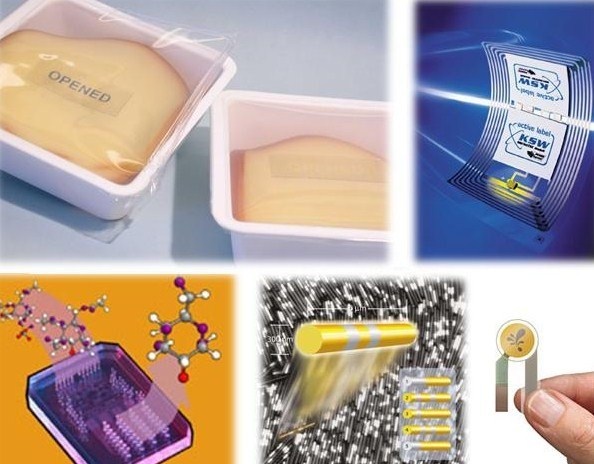 PIRA consultant Dr Graham Moore has highlighted the "big potential" for nanotechnology in packaging as long as issues surrounding consumer safety are fully addressed.


