- In the near future the role of packaging will change, we will see packaging as a resource rather than a resource waster
- Keeping the molecule in play will gain momentum (recyclability)
- Bio-based packaging materials will grow, but not necessarily biodegradable.
- Bright Future for Stand-Up Pouches: Standing for protection, Standing for communication, Standing for convenience, Standing for sustainability
- Increasing health and environmental awareness, rising food prices and food safety concerns and improved purchasing power will drive growth in the smart packaging market.
Affichage des articles dont le libellé est Recycling. Afficher tous les articles
Affichage des articles dont le libellé est Recycling. Afficher tous les articles
dimanche 2 novembre 2014
Sustainability and Functionality at the Heart of Packaging Innovation

dimanche 15 décembre 2013
Five Packaging Trends That Will Shape 2014: Smart, Social, Flexible, Convenient and Sustainable
Here is my list of 5 packaging trends to watch closely in 2014:
1) Food
waste, Smart Packaging a part of the Solution

In a world of 7 billion people, set to grow to 9 billion by 2050,
wasting food makes no sense Economically, Ethically and
Environmentally.
Food safety and Food waste is a bigger environmental problem than
packaging waste. Packaging has a vital role to play in containing and
protecting food as it moves through the supply chain from farm to fork. Shelf-life
extension is the Holy Grail for the food industry.
Smart packaging (active and intelligent) has been focused on retailer-benefits,
namely: food safety and security, spoilage reduction and extending shelf-life. In
the future expect it to be more consumers focused: delivering enhanced
freshness and better information to elevate product quality for consumers.
According to Freedonia Group (2012), US Demand for smart packaging is
forecast to climb 8% annually to $2.3
billion in 2015, significantly outpacing overall packaging demand. Advances
will be driven by the availability of products with more reasonable price
points and those offering enhanced shelf life and/or improved quality.
2) Stand-Up
Pouches are growing rapidly - Standing for protection, communication,
convenience, and sustainability
Consumers’ nomadic life-styles and the growing number of
single and senior households favor a trend toward single and small-portion
packs. Flexible packaging, especially stand-up pouches constitute the ideal
solution.
The top three packaging characteristics cited
by packagers as reasons for choosing stand-up Pouches are cost savings per
individual package, improvements in shelf appeal and better barrier performance.
The top three manufacturing performance justifications for the choice of
flexible packaging are decreased operating costs, increased output, and greater
flexibility in manufacturing change-over.
According to PCI Films Consulting (2013),
US demand for stand-up pouches is forecast to grow by 42% over the next five
years to reach almost 24 billion units in 2018. Beverages and pet food are the
largest end use categories, closely followed by human food applications with
around 30% share. One of the key factors contributing to this market growth is
the increase in demand for convenience in packaging.

3) Bio-based
packaging materials will grow, but not necessarily biodegradable

Recyclable
PET made from renewable resource (Sugarcane) is projected to offer significant
growth potential over the longer term, particularly as large corporations,
especially those in the soft drink industry, are investing heavily in the
development of this material.
According
to European Bioplastics (2013), the production capacity of biobased PET today is
around 600,000 tonnes a year. This
volume is reported to grow to roughly 5 million tonnes by 2016. Regarding rigid
applications, PET is mainly used to make beverage bottles, other transparent
bottles or rigid trays and films.
4) Inbound
Marketing - Social media and social selling

Social selling has rapidly gained influence as a powerful B2B
strategy for building customer relationships, as well as generating sales
opportunities. People want to buy from a company they can trust as being
honest and transparent. Your positive and social interactions in social media
networks will go a long way in establishing the credibility of your brand. The
more people feel they can trust you, the more people they will tell about you.
It is clear that marketing is changing on a fundamental level
as the internet continues to revolutionize how we find, buy, sell, and interact
with brands and their products or services. The days of annoying consumers with
intrusive advertising and marketing tactics are fading. Traditional Marketing
was about pushing messages out. Today it’s about pulling people in. Inbound
marketing is a marketing focused on getting found by customers. The new
age of marketing is about providing value and earning customer loyalty instead
of simply pounding a message into consumers heads and hoping it will stick.
From a recent Canadean report “Global Packaging Industry CEO
Business Outlook Survey 2012-2013”, advertising budgets, “email and
newsletters,” “social media and networking sites” and “public relations” are
expected to register the highest investment, identified by 47%, 44%, and 36%,
respectively. Conversely, “television,” “outdoor,” “radio” and “newspaper”
advertising is expected to decline.
5) e-Commerce
– a sales channel for growth

It’s
no secret that online retailers are gaining serious market share. Consumers
spent a total of $5.3 billion online over Thanksgiving weekend, an increase of
22% over last year, when shoppers spent $4.3 billion online. Cyber Monday, the
busiest online shopping day of the year, broke yet another record this year as
shoppers spent $1.74 billion online,
marking a record for the most dollars spent online in a single day. By 2017,
eMarketer estimates that e-commerce spending will reach $440 billion
The growth in e-commerce presents an opportunity to assess
the whole supply chain, to consider new types of packaging. As e-commerce
grows, it may be possible to use simpler retail packs, make them smaller, leave
them unprinted or perhaps remove them entirely.
The continuing popularity of online shopping will propel
healthy gains for corrugated boxes used in the fulfillment of Internet sales
(Corrugated & Paperboard Boxes, Freedonia 2012).
Best wishes for a healthy, wealthy, sustainable and
innovative New Year 2014!
mardi 23 juillet 2013
Green Packaging in the BIG EASY: Pilot Conducted in New Orleans Fish House

New Orleans
seafood is going green. Global Green USA’s Coalition for Resource Recovery
(CoRR) joined forces this past week with the New Orleans Fish House to test
recyclable coated corrugated boxes as methods of transporting locally caught
seafood. These innovative boxes, made by CoRR members Cascades Industrial
Packaging and Interstate Container, are designed to be recyclable, unlike the
paraffin-coated packaging typically used, and also withstand the icy seafood
packing process.
“It may seem
unusual to get this excited about cardboard boxes, but we are thrilled to
highlight these recyclable products,” said Global Green USA’s Lily Kelly,
interim director of CoRR. “If we were to replace all the unrecyclable packaging
used across the country for seafood, produce, poultry and meats, it would be
the equivalent of shutting down an entire coal-fired power plant with no loss
of energy, and a tremendous gain in savings and revenue for grocers and
restaurants.”
“From a
business perspective, it makes perfect sense,” said Eddie Gonzales, Sales
Representative at the New Orleans Fish House. “Our customers don’t want to bear
the costs of landfilling boxes, so recyclable packaging is an added value that
we can offer. It’s the next step in our evolution.”
The pilot
began at the New Orleans Fish House, where seafood and ice were placed in the
recyclable boxes, palletized, and loaded onto their delivery truck.
Representatives from Global Green USA and the packaging companies followed the
truck as it made deliveries in the Baton Rouge area, observing the unloading of
the seafood at an event venue, a large hotel, and a restaurant. At each
location, the recipients of the boxes confirmed that the boxes were performing
well, and expressed excitement that they were recyclable. “It will save us time
and keep costs and waste down. I love them,” said one recipient.
This pilot
marks a step toward more sustainable food systems: greens, vegetables, seafood,
and meats are often transported in paraffin-coated cardboard, generating 1.45
million tons of solid waste that must be sent to landfills or burned. If these
boxes are designed for recycling, and recovered, retailers and restaurants
could realize a net benefit of combined cost savings and revenue of $200
million nationwide.
The boxes,
which were donated for testing by Cascades and Interstate Container, are
recyclable in accordance with the Fibre Box Association’s recyclability and
repulpability protocol for wax-alternative coatings. “The Cascades Polar box,
which we tested for this pilot, stood up to the process quite well,” said Islem
Yezza, Technical and Business Development Director at Cascades. “We are proud
to be able to provide a variety of more sustainable alternatives to
unrecoverable polystyrene foam and wax-coated boxes.”
Jeff Cormier, National Sales and Marketing Manager at
Interstate Container, was likewise pleased with the results of the pilot. “We
make Greencoat recyclable boxes for a variety of uses, and have seen a lot of
success with poultry and produce,” he said. “We are very encouraged by the
outcome of this pilot, and look forward to bringing recyclable seafood boxes to
New Orleans and beyond.”
dimanche 17 mars 2013
Greening Fast Food Packaging

Dogwood Alliance’s report “Greening Fast Food Packaging: A
Roadmap to Best Practices,” outlines eight key attributes of environmentally
friendly fast food packaging, and provides guidance on how to assess environmental
impacts in the supply chain. The report highlights leaders in the fast food
industry. It also includes a survey to help assess a company’s current
packaging.
- Embrace Corporate Leadership on Sustainability
- Use Full Life Cycle and Supply Chain Approach
- Reduce Overall Packaging and Increase Efficiency
- Increase the Use of Recycled Fiber
- Eliminate Paper Originating from Controversial Forestry Practices
- Increase In-Store Recycling and Recovery
- Eliminate Toxic Inks, Coatings and Labels
- Reduce Carbon Footprint
The full report is available at DogwoodAlliance
mercredi 23 janvier 2013
Results of Recyclable Produce Box Pilots
For the pilots, Global Green USA teamed up with members of their Coalition for Resource Recovery (CoRR) to test alternatives to paraffin-coated produce boxes, which cannot be recycled and are a contaminant within bales of uncoated cardboard. Boxes were tested with a variety of wet cooling processes in California and New Jersey and the results show that many box products with recyclable coatings are robust enough to withstand vacuum cooling, hydro-vac, and hydro-cooling processes.
"The move to recyclable-coated boxes will divert waste from landfills and save money for the foodservice and retail industry," says Lily Kelly, interim director of CoRR and coordinator of the pilots. "It is an exciting time."
Greens, vegetables, seafood, and meats are often transported in paraffin-coated cardboard, generating 1.45 million tons of solid waste that must be sent to landfills or burned. If these cases were designed for recycling and were recycled, CoRR believes retailers and restaurants could realize a net benefit of combined cost savings and revenue generation of $200 million nationwide. CoRR has worked since 2008 to accelerate the industry adoption of alternative recyclable-coated packaging and recycling it, which could reduce America's annual carbon emissions by 4.5 million mtCO2e—the equivalent of eliminating an entire coal-fired power plant with no loss of energy. (The Fibre Box Association estimates that 5% of OCC is wax-coated. EPA’s 2010 Solid Waste Facts and Figures, WARM Tool, and Greenhouse Gas Equivalencies Calculator were used to calculate potential greenhouse gas savings. Savings assumes 100% of the boxes and packaging generated is recycled. National restaurateur and grocers’ savings are based on a national average tipping fee of $44.09, based on the 2010 data in BioCycle’s State of Garbage report. A spot market price of $100/ton of OCC was assumed.)
Food producers report finding recyclable boxes easier to use than paraffin-coated boxes, and have benefited from being able to recycle them on the farm. “This is good news for farmers and our customers," says Vince Consalo of Consalo and Sons, a produce distributor in Vineland, NJ, who helped to test the recyclable boxes in September. “Recyclability is a big selling point." Other participants in the pilot program also expressed satisfaction with the results, including Lakeside Organic Gardens in Watsonville, CA.
The results are advantageous for grocers, who may soon be receiving more recyclable-coated boxes that they can bundle with their regular cardboard instead of paying to send them out with the trash. "Selling cardboard is a revenue stream for us, and it helps contribute to our Zero Waste Goals of 2020," says Dom D'Agostino of Ahold Intl., which operates several grocery store chains, including Stop and Shop and Giant. "If we could recycle coated cardboard, it would significantly help us meet these goals."
Global Green USA's pilot series is slated to continue in 2013. "As a third party, our job is to document these tests and spread the word about what is recyclable and what works,” says Kelly. "Our next steps are to document increasingly tough use of the boxes—wetter cooling and longer distance traveled. We’re confident that these boxes can handle it, and we’re excited to document next year's story in video as well."
vendredi 18 janvier 2013
The new, reusable (and recyclable) Starbucks® cup: Clarifications, Thoughts and Questions
I would like to share with you some Clarifications/Thoughts/Interrogations
regarding the new, reusable (and recyclable) Starbucks® cup for hot beverages
(source).

1- "When I talked with Jim Hanna,
director of environmental impact for Starbucks, regarding the cups made out of
100% virgin polypropylene, he told me that one main reason the company turned
to plastic was to cut down on paper waste. Starbucks uses about 4 billion
disposable cups annually and the interior wax coating makes them difficult to
recycle." MISLEADING: Starbucks disposable cups are made from
paper coated with PE (polyethylene). Polycoated cups are recyclable and
repulpable. Furthermore, most paper mills are able to process paper mixed with
other materials such as polycoated paper. Pulper equipped with scavenger could
remove plastic debris. Finally, polyethylene coating represents less than 6.6%
of total basis weight.
2- "The exciting thing about PP is
that it's one of the most versatile resins out there," Hanna said.
"From cradle-to-cradle, PP offers one of the best environmental stories;
it's just a winner all around." MISLEADING: Starbucks reusable cups are made from polypropylene
#5 Plastics. In fact, most polypropylene #5 plastics, unless
they're reused, end up in the landfill since so few
municipalities accept them.

3- What is the carbon footprint of reusable
cup VS disposable cup?
4-
PP based reusable
cups cost $1. However, a major price hike has hit the North American
polypropylene market, sending prices up an average of 15 cents per pound since
Jan. 1. Can we expect a cup price increase in the upcoming months?
5- How about increasing Starbucks
cups recycled fiber content? Cascades, developed recently a new grade of
cupstock paper with 25% recycled fiber content.
6- How about water-based coating for a
fully repulpable and recyclable cups? (The idea is to replace Polyethylene by
water-based coating)
7-
How long do the
cups last? Reusable cups need a lot of carefulness/attention/love: not
lose them, not crush them, and not forget to bring them…
mercredi 16 janvier 2013
ThermaFresh Box: RETHINKING fresh fish packing containers
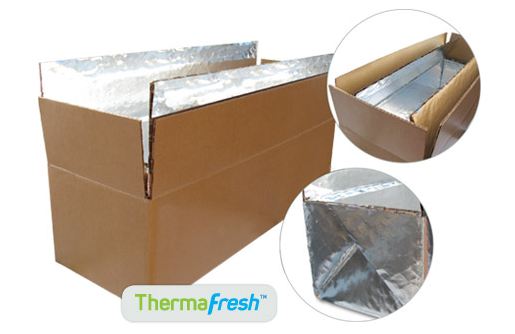
Cascades offers ThermaFresh, a new packaging innovation that is an
ingenious eco-designed option to replace traditional fresh fish packing
containers. By rethinking protective packaging, Cascades provides the industry
with a high-performance, cost-effective solution for the packaging and
distribution of fresh food.
The ThermaFresh container is designed for shipment
of fresh food both inside and outside the cold chain, and its thermal
performance is equivalent to that of the traditional containers. The containers
can keep the food at the required chill level (39°F /4°C ) outside the cold chain for
a period exceeding 48 hours.
The components
of the ThermaFresh container are a water-resistant
corrugated box, a metalized film liner, and a honeycomb structural core. The
thermal barrier uses the principle of radiant barrier technology. The Technicomb
(honeycomb paperboard) construction traps the air inside, and the metalized
film liner reflects the heat molecules; when both are combined, they provide
significant thermal performance. Since the ThermaFresh container is Direct Food Contact compliant, no plastic bag is
required for the shipment of whole fishes.
 The smart,
patented waterproof liner is crack-proof and the ThermaFresh container can resist rough handling. This considerably
reduces spoilage and eliminates potential contamination which can occur through
the distribution process.
With this
new alternative container, there is no additional disposal cost to the end
user. The ThermaFresh container is
easily recyclable and it can be bailed within the OCC (Old Corrugated
Container) programs. Thanks to ThermaFresh,
rethinking fresh food distribution packaging provides the industry with the
cost effective, added performance it needed.
Download Brochure
“We start with the perfect water, which produces beautifully textured fish, but the other important thing is the way we pack it up. We have a system [of recyclable corrugated cardboard cartons and liners] that makes sure that the chef gets to experience the fish exactly as it was pulled from the water, and then customers get a great dining experience”. Dave Mergle, Skuna Bay's marketing director.
Source: Skuna Bay Salmon
Cascades has produced a video-animation exhibiting all of its eco-designed packaging innovations with respect to industrial uses, which is available on line at: Cascades Industrial Packaging
jeudi 29 novembre 2012
How2Recycle Label: Making recycling make sense
Variation in recycling programs, unclear
labeling, and inaccurate recyclability claims make proper recycling a
challenge. The How2Recycle Label was created to provide consistent and
transparent on-package recycling information to consumers. Currently the label
only applies to packaging sold in the U.S.

The
Sustainable Packaging Coalition (SPC), a project of sustainability nonprofit
GreenBlue, is pleased to announce additional participants in the soft launch of
its pioneering How2Recycle on-package recycling labeling system.
Major brand names,
including Best Buy, Clorox and Minute Maid, will be joining 10 other leading
companies already participating in the soft launch, including Costco Wholesale,
General Mills, Seventh Generation, and REI, in implementing the label on select
packaging available nationwide in early 2013. Additionally, the SPC has
announced its five-year plan for the labeling system.
How2Recycle was developed to reduce consumer confusion around recycling in the
United States with a clear and consistent recycling label and corresponding
informational website, how2recycle.info. It provides companies with an easy way
to conform to the Federal Trade Commission's (FTC) "Green Guides"
while using nationwide recyclability data. While several other recycling labels
and symbols exist, the How2Recycle Label is the only one that communicates
recyclability across all material types and gives explicit directions to
consumers to influence their recycling behavior. It also specifies when a
package component is not recyclable.
samedi 3 novembre 2012
Mineral oil: a need for more data
Nearly 90% of the U.S.
population has access to paper recycling services, and more than 65% of all
paper that is consumed is recovered. In accordance with the Sustainable Packaging Coalition’s (SPC)
Definition of Sustainable Packaging (see www.bit.ly/pwe00427),
it is essential to optimize the use of renewable or recycled source materials
in package design, to help ensure sustainable management flows by encouraging
waste reduction and resource conservation. Utilizing recycled-paper content can
have a number of environmental benefits, such as landfill diversion, energy
savings, and resource conservation, while still meeting the performance
criteria required by many packaging manufacturers.

There are tremendous opportunities to increase and utilize recycled-paper
content in packaging, but we need to be aware of products entering the
recycling stream. By designing products from the start with sustainability and
their full life-cycle impacts in mind, they can be made in a way that
facilitates effective reprocessing, ultimately allowing them to become source
materials for new products. The SPC, through its systems-based approach, is
working toward engaging stakeholders throughout the supply chain in an attempt
to make such efforts common practice.
However, this remains a work in progress, and there have been, and will
continue to be, bumps along the way. In early 2011, a number of technical
reports and media stories questioned the quality of recycled paperboard; in
particular, concerns were raised over potential packaging migrants. The
possible migrants were identified as mineral oil hydrocarbons (MOH), with their
primary source being traced back to inks used in newsprint entering the
European recycling stream. The researchers engaged in these studies found that
petroleum-based inks used in European newsprint could potentially migrate from
the recycled content into some food products, with a high degree of variability
between products. The concerns focused on the high levels of uncertainty around
MOH’s potential impacts on the human body and their potential to migrate from
such packaging into foods.
mercredi 24 octobre 2012
Paperboard Package of the Year
One-hundred and forty-three entries from
34 Paperboard Packaging Council (PPC) members were honored in a special awards
ceremony at PPC's Fall Meeting and Leadership Conference on October 18, 2012 in
Las Vegas, as part of the 69th annual North American Paperboard Packaging
Competition.

This year, the top Paperboard Package of
the Year award was presented to Graphic Packaging International (Marietta, GA)
for their new package design for the 10-Count Capri Sun carton for Kraft Foods.
The new fridge vendor-style design features "I-Beams," an extension
of the carton's end flaps that are folded in toward the carton. The new design
is 20% lighter than the original carton, saving approx. 35,000,000 pounds of
fiber annually. Moreover, a 60% increase in inbound pallet quantities was
achieved, resulting in approx. 1,750 trucks eliminated from the inbound supply
chain, thus saving 880,000 miles driven annually. A 7% increase in outbound
cases per pallet resulted in a 2.5% increase in finished goods on outbound
trucks and a 10% reduction in tertiary pallet packaging materials.
To see the list of top winners click Here
mercredi 18 juillet 2012
Food Packaging: Less is Sometimes More!

Food
waste is a growing issue, anything that can assist to reduce the volume of
spoilage in a safe manner are welcome advances. At the same time the
growing volume of garbage is also a global issue and food packaging is a
substantial contributor to this dilemma. Reducing packaging at its source
means less waste and material to recycle and lowers overall transport costs;
thus lowering the environmental impact. Few things influence individual health
more than the food they eat, therefore safety in the packaging of food items is
a global health issue. The quest to create safe, low waste, low
environmental impact packaging is therefore likely to continue to drive
innovation in this area.
mardi 17 juillet 2012
Flexible Packaging Reduces Energy Consumption First
The flexible industry is claiming to be
the most energy efficient in a paper released last month (Here). Most
sustainability energy mantras say “Reduce first and then optimize”, with renewable
where possible.

According to Flexible Packaging Europe, because
flexible packaging can be assembled at the filling plant from rolls of
material, there is no need to transport the empty, but already formed
packaging, from the packaging converter to the filling/packaging facility,
hereby saving a significant number of truck journeys on our congested European
road network. For example, it would take approximately 26 truck journeys to
transport the equivalent quantity of pre-formed packaging from the manufacturer
to the filling factory whilst it would require only one truck load for the
equivalent quantity of rolled flexible pouch material.
Flexible packaging not only occupies minimal space
during the inbound transport, but also on the outbound transport of the filled
product to the retailer/consumer.
Optimized transportation of filled packs made from
lighter and thinner materials means more product per truck load which in turn
equals less energy consumption. Comparing the difference between transporting a
beverage packed in a 0.2l flexible stand-up pouch with a 0.2l glass bottle, we
see that product packed in foil-laminated pouches requires half the number of
standard truck loads due to the lower weight and reduced space between the
products says the flexible packaging body.
These energy savings translate directly to a
reduced overall environmental impact. On top, the reduced truck loads along the
supply chain help reduce traffic congestion in the cities and on the highways.
And this leads to more energy savings due to a more fluent traffic and less
frustration for drivers.
Flexible packaging provides both effective and
efficient packing solutions according to the industry body because it can optimize
the combinations of different materials to maximise the practical functionality
of the packaging and optimize the cost whilst reducing the environmental
impacts throughout the product’s lifecycle.
To learn more about how Flexible Packaging aids more
resource efficient consumption and lifestyles
check out ‘A Perfect Fit’ on www.flexpack-europe.org.
lundi 25 juin 2012
New Web site touts carton's environmental benefits
Evergreen Packaging has launched choosecartons.com, an interactive Web site designed to educate and encourage consumers to consider the eco-friendly attributes of packaging in their purchasing decisions.
According to the company press release, cartons provide several environmental benefits, including the following:
- Consumers who choose products in a carton are taking home an average of 94% product and only 6% package.
- Cartons are made with renewable materials—more than 70% of the Evergreen carton is made from paper, all from trees from responsibly managed forests.
- Cartons are made with renewable energy. More than 50% of the energy used to make the cartons comes from biomass.
- More than 42 million households have access to carton recycling.
The site provides information on how to increase carton recycling, and how to get a carton-recycling program started in your community. It also offers interactive games and “green” tips, and includes a showcase of recycled-carton art.
Source
jeudi 21 juin 2012
Twelve principles of sustainable packaging
- Reduce/eliminate hazardous substances in the packaging materials
- Use raw material/feedstock of greener origin
- Select packaging material based on its disposability
- Create a green design
- Modify/substitute existing packaging material or process
- Make packaging machines and systems energy efficient
- Reduce waste generated during processing, conversion, and packaging operations
- Apply green logistics
- Segregate and dispose of waste
- Optimize packaging economics
- Comply with regulations and create awareness among consumers
- Use sustainable packaging metrics and tools to evaluate sustainable packaging.
dimanche 17 juin 2012
Bright future for flexible packaging
Modern developments in flexible
packaging are bringing pouches, films and foils to the market on an
unprecedented scale. We profile some of the flexible packaging market's most
promising innovations to safeguard product quality, enhance visibility, improve
environmental sustainability and more.

Flexible packaging has been shaking up the
packaging industry for many years now, especially in the food packaging market,
where flexible materials are introducing a wide range of new design concepts to
minimise waste (both in terms of conservation and cost), attract consumer
attention and maintain the freshness of the products within.
The flexible market looks set to continue its impressive rate of
growth in the industry and on store shelves. A 2011 report by packaging
consultancy Smithers Pira forecast that the worldwide value of flexible
packaging would grow from $58.3bn in 2011 to $71.3bn by 2016, with a compound
annual growth rate of more than four percent.
Whether in the West or the East, this
growth will be driven by a raft of factors within the packaging and consumer
retail sectors. Growing demand for features, such as longer product shelf-life,
weight reduction and customer convenience, is an open door to packaging
developers to solve problems with innovative ideas. Here we round up some of
the products and trends that could help satisfy this expanding demand.
mercredi 6 juin 2012
Emballage alimentaire, santé et développement durable : l’histoire d’un paradoxe
Si, en Europe le sujet fait débat, en Amérique du nord, il est largement
ignoré. Il faut dire que la situation est différente. Les études ont montré que
les cartons nord-américains contiennent beaucoup moins d’huiles minérales que
ceux produits en Europe.
Pour l’heure, l’Agence canadienne d’inspection des aliments (ACIA) et la Food and Drug Administration (FDA) ne se sont pas
prononcées sur ce le sujet. Il serait pourtant opportun de combler le vide
réglementaire actuel et de définir une réglementation sur les huiles minérales.
Il faudrait également conduire d’autres études : méthodes d’analyses, migration
des huiles et impact sur la santé humaine.
Sans doute que oui, il y a migration des huiles minérales vers les
aliments. Malheureusement, les connaissances actuelles ne permettent pas
d’affirmer hors de tout doute que cette migration ne pose aucun risque sur la santé
humaine. Une nuance à considérer : nous ingurgitons quotidiennement de
nombreux composés potentiellement toxiques, et il n’est pas démontré que les
emballages doivent être davantage incriminés que d’autres sources de
contamination.
Des solutions existent, certaines radicales, certaines très couteuses.
Leur conséquence : elles entraineraient inévitablement une hausse du prix
des aliments en magasin. Dans un prochain billet, nous vous présenterons
quelques-unes de ces pistes de solutions. Pour le moment, il faut importer un
peu de rationalité dans le débat. Il faut relativiser. Si l’on s’alimente de
manière variée et équilibrée, le risque pour le consommateur est négligeable.

dimanche 3 juin 2012
LiquiGlide: A revolutionary super-slippery coating to liberate your ketchup!
A group of MIT researchers has developed a interior lining for bottles which allows the contents to simply glide out. The product is called Liqui-Glide.
LiquiGlide offers several benefits: It's more convenient for consumers, and it makes recycling easier because the bottles are clean. It also wastes less food, because people won't be tossing out bottles coated with mustard that they can't squeeze out.
mercredi 9 mai 2012
Converting Quarterly: Five sustainability trends that will shape packaging

Sustainability
has fast become part and parcel of the global packaging industry, whether your
product is web-processed plastic flexible packaging, paper-based corrugated
containers or rigid metal cans and glass bottles. Packaging converters and
their raw-material suppliers are being driven by demands from their direct CPG
customers, retailers and consumers to
find solutions.
Full article is
available online. Click HERE to
read the 2012 Quarter 2 Digital Edition NOW.
lundi 23 avril 2012
Farmers and grocers start thinking outside the wax box

The produce industry
- which uses tons of the nonrecyclable paraffin-coated cardboard boxes each
year to ship fresh fruits and vegetables all over the world - is weighing a
greener, wax-free option.
Lakeside
Organic Gardens of Watsonville shipped a small load of iceberg lettuce to New
Leaf Community Market in Santa Cruz using cardboard boxes lined with a
sustainable alternative.
The agriculture
industry has used a mix of cardboard boxes for nearly a decade, including
wax-lined and those made of recyclable materials. Growers regularly ship
produce in plastic containers or wood pallets that can be reused.
However, there are
circumstances, roughly 5 percent of the time, which demand the use of a
wax-coated box because of its strength and ability to handle the ice and water
needed to keep perishables fresh over long distances such as trips to the East
Coast.
Industry leaders say
even that small percentage adds up to nearly 1.5 million tons of boxes getting
hauled off to landfills each year.
Garcia of Lakeside
Organic Gardens said his company spends at least $250,000 each year on dumping
nonrecyclable vegetable boxes in the landfill.
Inscription à :
Articles (Atom)